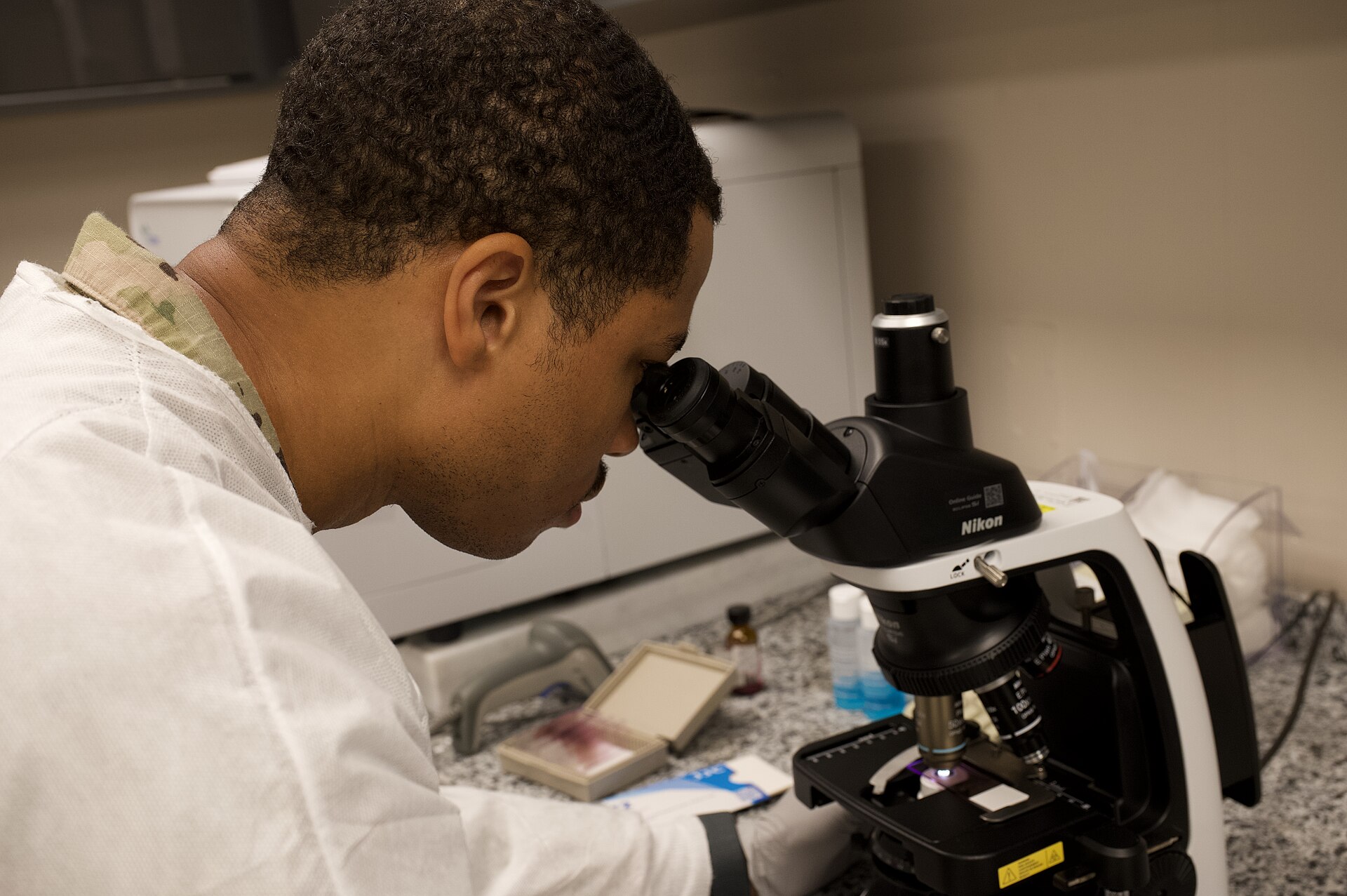
Blood Smear
Sourced reference. This entry is compiled from MedlinePlus and is reproduced for reference rather than written by eMed7. Reference ranges differ between laboratories — always read a result against the range printed on your own report.
A blood smear is a test that's used to help diagnose and monitor a wide variety of blood disorders and other conditions that affect your blood. The test checks a sample of your blood under a microscope to see whether your blood cells look normal. It looks at your: Red blood cells (RBCs), which carry oxygen from your lungs to the rest of your body; White blood cells (WBCs), which fight infection and are part of your immune system; Platelets, which help your blood clot to stop bleeding when you have a cut or wound; To do a blood smear, a sample of blood is spread on a glass slide.
The slide is treated with a special stain that makes the cells easier to see. Then a laboratory professional looks at the slide under a microscope to check the size, shape, and number of cells in your blood sample. Automatic computer programs may be used to help examine your blood smears.
Why this test is done
You may need a blood smear if:
You had a complete blood count (CBC) with abnormal results. A CBC is a group of blood tests that measures the number and size of the different cells in your blood. It's often done as part of a routine checkup.
A blood smear can confirm abnormal CBC results by checking the size and number of your cells. It can also give your health care provider more information about what your blood cells look like, including their color.
You have symptoms of a condition that affects your blood cells. Symptoms may include:
- Fatigue
- Jaundice, a condition that causes your skin and eyes to turn yellow
- Nosebleeds or other unusual bleeding
- Easy bruising
- Fever
- Bone pain
- Swollen lymph nodes, also called "swollen glands"
You are being treated for a condition that affects your blood cells, such as anemia or blood cancer. A blood smear can help find out if your treatment is working.
You have symptoms of certain diseases caused by parasites, and you live in or travel to areas where those diseases are common. These diseases include:
- Malaria, which is spread by bites from infected mosquitos
- Babesiosis, which is spread mainly by bite from infected ticks
Symptoms of these parasitic diseases can be like having the flu. They include, fever, chills, body aches, nausea, and fatigue.
How to prepare
You don't need any special preparation for a blood smear. If your provider has ordered other blood tests, you may need to fast (not eat or drink) for several hours before the test. Your provider will let you know if there are any special instructions to follow.
Sample type
Blood
Other names for this test
peripheral smear, peripheral blood film, smear, blood film, manual differential, differential slide, blood cell morphology, blood smear analysis, leukocyte differential
Full library entry
Reference ranges, sample type, and citations for this marker.
Open in the biomarker librarySources
- nhlbi.nih.gov/health/anemia/hemolytic-anemia— MedlinePlus
- nhlbi.nih.gov/health/platelet-disorders— MedlinePlus
- nhlbi.nih.gov/health/thrombocythemia-thrombocytosis— MedlinePlus
- nhlbi.nih.gov/health/thrombocytopenia— MedlinePlus
Track this marker over time
File the reports behind your results in eMed7 and repeat values build into a trend. Free to start.
Educational content only. This entry describes what a test measures and how published reference ranges are defined. It is not a diagnosis, does not interpret your personal results, and is not a substitute for a qualified doctor.