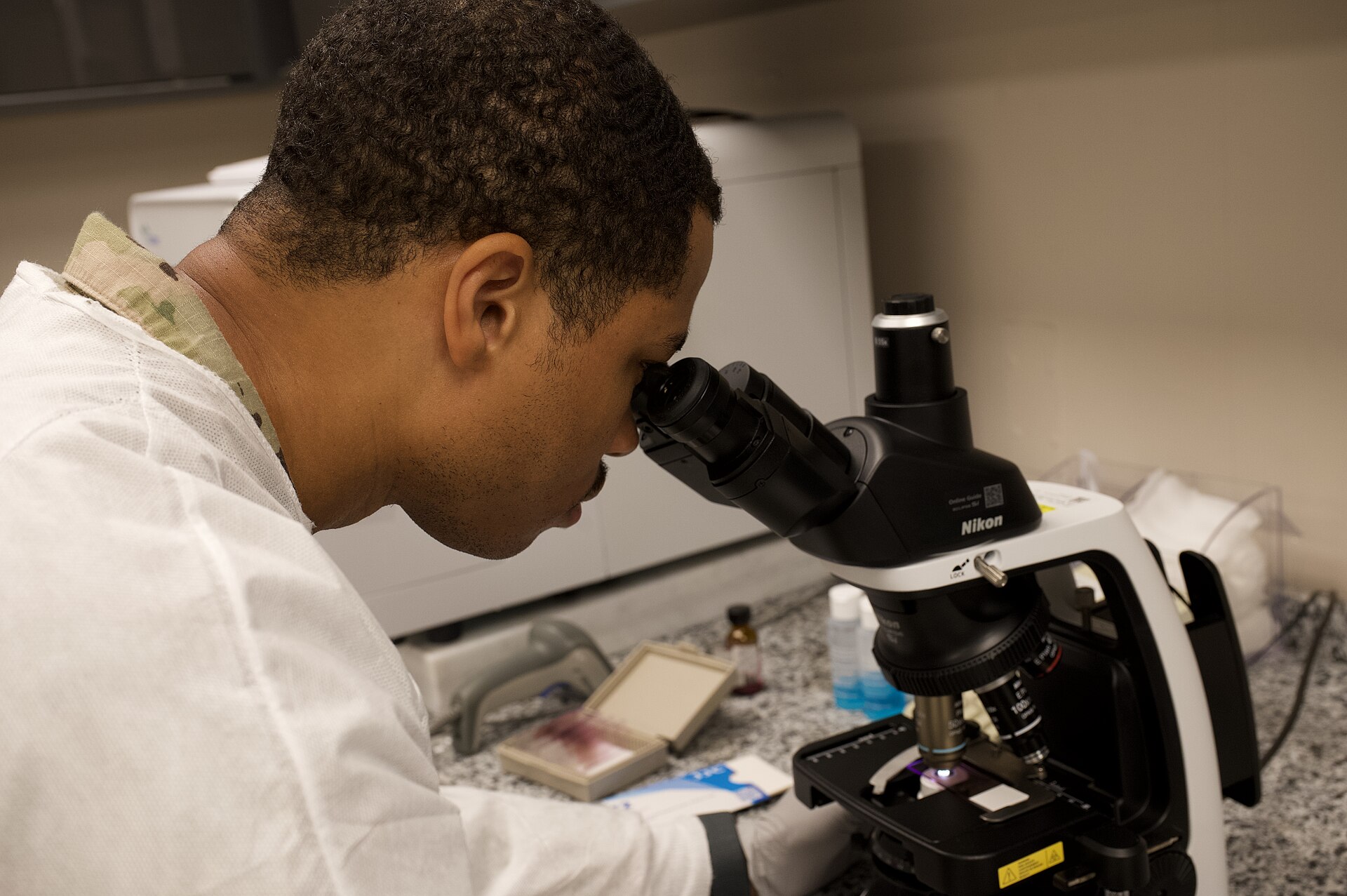
G6PD Test
Sourced reference. This entry is compiled from MedlinePlus and is reproduced for reference rather than written by eMed7. Reference ranges differ between laboratories — always read a result against the range printed on your own report.
This test measures the amount of G6PD in your blood. G6PD stands for glucose-6-phosphate dehydrogenase. It's an enzyme, a protein that speeds up certain chemical reactions in your body.
It helps your red blood cells work properly. Red blood cells move oxygen from your lungs to every cell in your body. Your cells need oxygen to grow, reproduce, and stay healthy.
If you don't have enough G6PD, it's known as G6PD deficiency. This deficiency: It is a genetic disorder that is inherited (passed down from parent to child).; It mainly affects men. Women can be affected, but they are more likely to be carriers of the defective gene.
This means that they may not have symptoms, but they can still pass the gene on to their children.; It is more common in people of African, Mediterranean, or Asian descent.; G6PD deficiency can cause the destruction of your red blood cells. When red blood cells are destroyed faster than your body can replace them, it's called hemolytic anemia. If you have hemolytic anemia, your cells don't get all the oxygen they need.
Most people with G6PD deficiency don't have symptoms until they are exposed to certain 'triggers' which set off the destruction of red blood cells. Triggers can include: Fava beans, also called broad beans. Hemolytic anemia which happens after eating fava beans or inhaling pollen from fava plants is called favism.; Viral infections.; Bacterial infections.; Certain antibiotics.; Anti-malaria medicines.; Other medicines, including nonsteroidal, anti-inflammatory drugs (NSAIDs) such as ibuprofen and aspirin.;
Why this test is done
You may need a G6PD test if you have symptoms of hemolytic anemia. These include:
- Fatigue
- Pale skin or jaundice, a condition that causes your skin and eyes to turn yellow
- Rapid heart rate
- Shortness of breath
- Dark or yellow-orange colored urine (pee)
Your newborn baby might need a G6PD test if they have jaundice that doesn't go away in two weeks and/or is not caused by another condition. Your baby may also be tested if you have a family history of G6PD deficiency.
How to prepare
There are no special preparations needed for a G6PD test.
Sample type
Blood
Other names for this test
G6PD deficiency test, glucose-6-phosphate dehydrogenase test, G-6-PD, RBC G6PD test
Full library entry
Reference ranges, sample type, and citations for this marker.
Open in the biomarker librarySources
- pubmed.ncbi.nlm.nih.gov/16225031— MedlinePlus
- ncbi.nlm.nih.gov/books/NBK470315— MedlinePlus
- ncbi.nlm.nih.gov/books/NBK558904— MedlinePlus
Track this marker over time
File the reports behind your results in eMed7 and repeat values build into a trend. Free to start.
Educational content only. This entry describes what a test measures and how published reference ranges are defined. It is not a diagnosis, does not interpret your personal results, and is not a substitute for a qualified doctor.