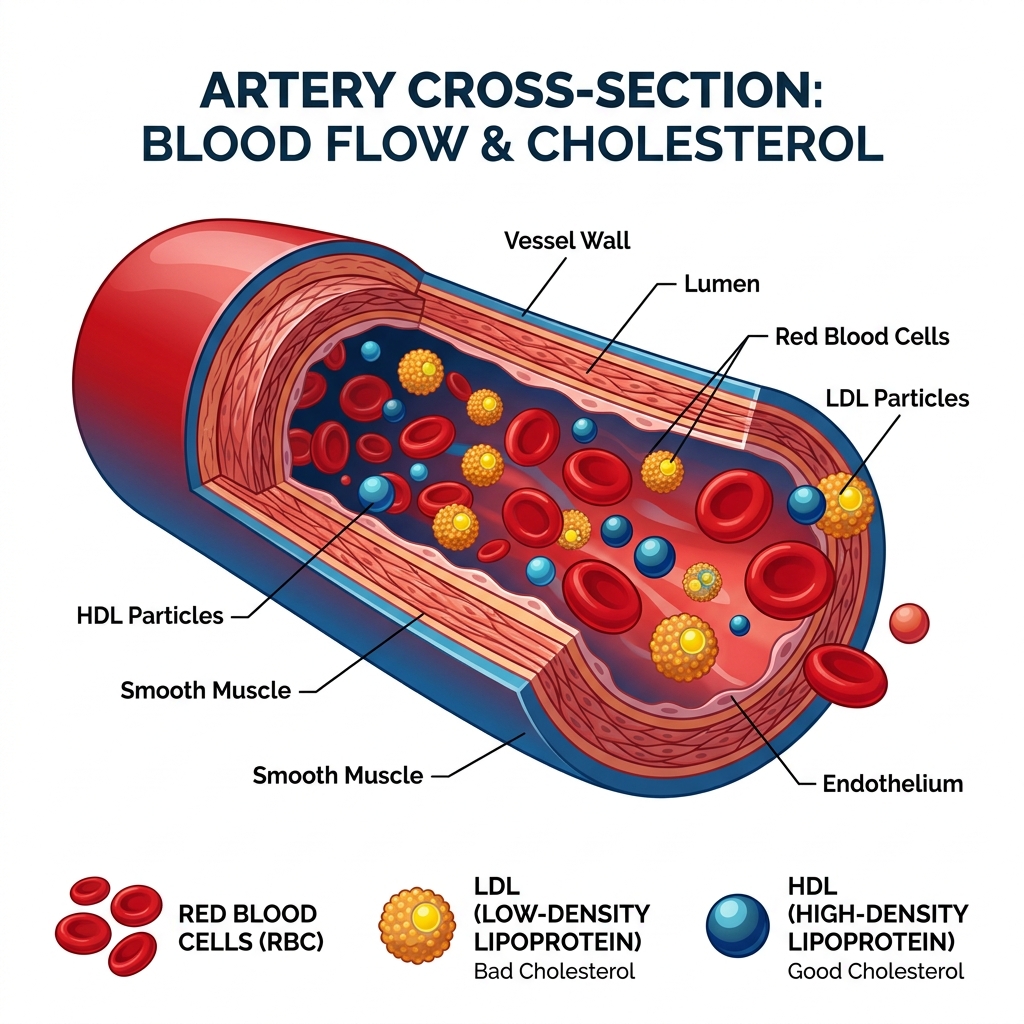
Lipid Panels Explained: The Truth About LDL and HDL Cholesterol
High cholesterol is often called a "silent killer" because it has no symptoms but directly increases the risk of heart disease, heart attacks, and stroke. To assess your risk, your doctor will order a **Lipid Panel**. Let's break down this panel's components.
1. LDL (The "Bad" Lipoprotein)
Low-Density Lipoprotein (LDL) transports cholesterol from the liver to your cells. If there is too much circulating, it can accumulate in the walls of your blood vessels, forming hard plaque that narrows arteries (atherosclerosis).
2. HDL (The "Good" Lipoprotein)
High-Density Lipoprotein (HDL) acts like a vascular garbage truck. It absorbs excess cholesterol in the blood and transports it back to your liver, which processes and eliminates it from the body.
3. The Cholesterol Ratio
Cardiologists pay close attention to the **Total Cholesterol to HDL Ratio** as it provides a clearer marker of cardiovascular disease risk than total cholesterol alone. A lower ratio is optimal.
Interactive Total Cholesterol to HDL Ratio Calculator
CLINICAL TOOL4.00
Moderate Cardiovascular Risk
Lipid Profile Chart
Track LDL, HDL, and Triglyceride trends alongside Atorvastatin compliance.
Scientific Validation Disclaimer: Cardiac guidelines are sourced from the AHA and CDC. Cholesterol ratios are indicators of risk, not absolute diagnoses. Discuss lipid-lowering therapies like Statins only with your cardiologist.