Skin Biopsy
Sourced reference. This entry is compiled from MedlinePlus and is reproduced for reference rather than written by eMed7. Reference ranges differ between laboratories — always read a result against the range printed on your own report.
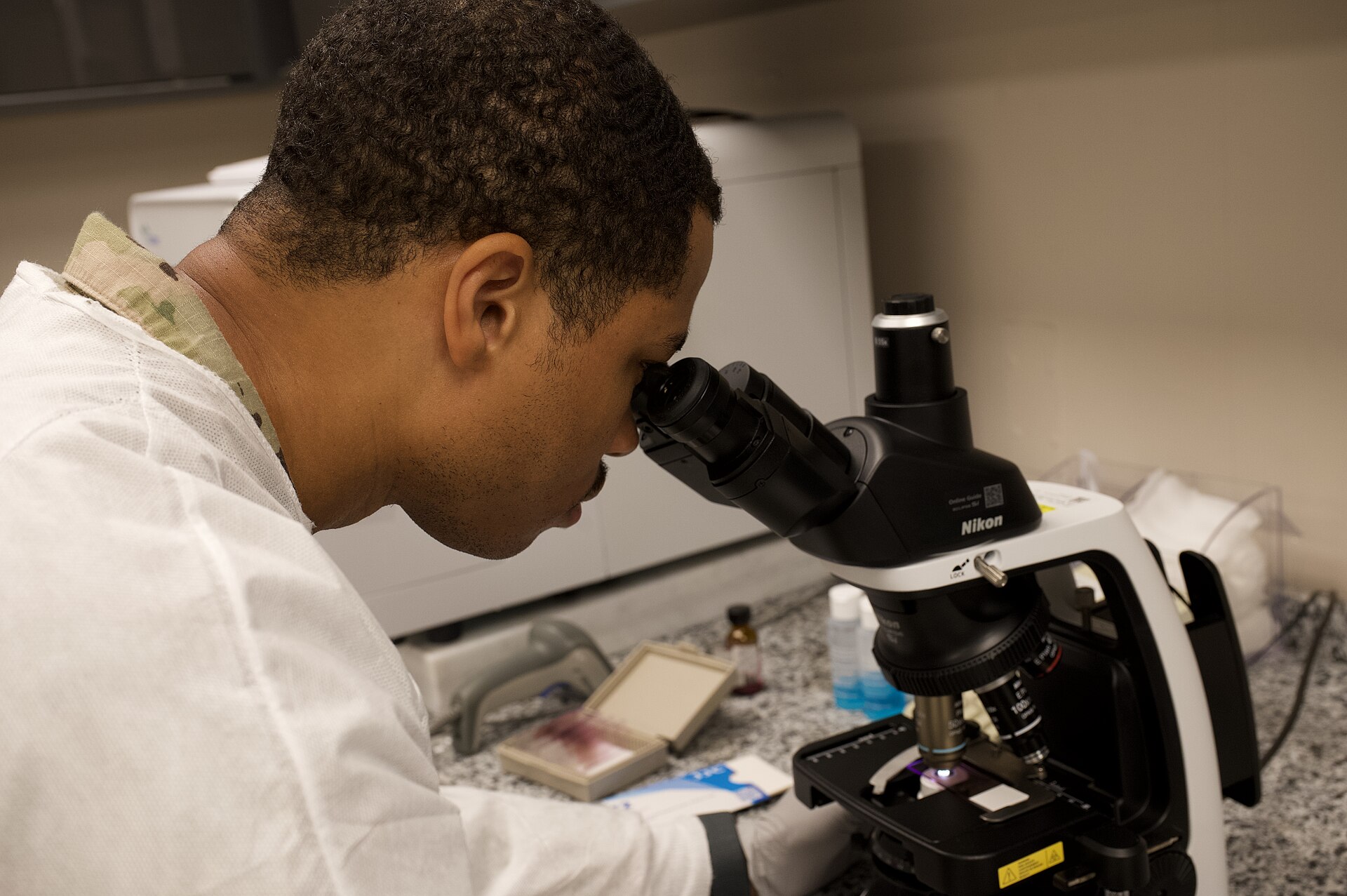
A skin biopsy is a procedure that removes a small sample of skin for testing. The skin sample is looked at under a microscope to check for a variety of conditions, including skin cancer. There are three main ways to do a skin biopsy.
The type of biopsy you get depends on the location and size of the abnormal area of skin, known as a skin lesion. These types include: A punch biopsy, which uses a special tool with a round blade to remove a small, round piece of skin. This may be used to get a sample that goes deeper into the skin.; A shave biopsy, which removes a sample from the topmost layers of your skin with a razor blade.
This is the most used of the three types.; An excisional biopsy, which removes the skin sample with a small knife called a scalpel (a small cutting blade).; Most skin biopsies can be done in a health care provider's office or other outpatient facility.
Why this test is done
You may need a skin biopsy if you have certain skin symptoms such as:
- A persistent rash.
- Scaly or rough skin.
- Open sores that won't heal.
- Blistering skin, which may be a sign of pemphigus, an autoimmune disease.
- A mole or new growth that has the "A-B-C-D-Es" of melanoma:
- Asymmetrical -- the shape is not regular.
- Border -- the edge is jagged.
- Color -- the color is uneven.
- Diameter -- the size is larger than a pea.
- Evolving -- the mole or growth has changed in the past few weeks or months.
How to prepare
You don't need any special preparations for a skin biopsy.
Sample type
Tissue/Biopsy
Other names for this test
punch biopsy, shave biopsy, excisional biopsy, skin cancer biopsy, basal cell biopsy, squamous cell biopsy, melanoma biopsy
Full library entry
Reference ranges, sample type, and citations for this marker.
Open in the biomarker librarySources
- ncbi.nlm.nih.gov/books/NBK378786— MedlinePlus
Track this marker over time
File the reports behind your results in eMed7 and repeat values build into a trend. Free to start.
Educational content only. This entry describes what a test measures and how published reference ranges are defined. It is not a diagnosis, does not interpret your personal results, and is not a substitute for a qualified doctor.